The iconic roar of a TIE Fighter's engines is a sound that strikes fear into the hearts of any ground-bound opponent. In Fortnite's ongoing Galactic Battle season, this symbol of Imperial might isn't just a menacing backdrop; it's a pilotable vehicle that can turn the tide of any match. Securing and mastering the TIE Fighter has become a definitive strategy for players aiming to claim a Victory Royale from the heavens. With its blistering speed and devastating laser cannons, this spacecraft offers a unique and powerful way to dominate the 2026 Fortnite battlefield. But how exactly does one commandeer this piece of Star Wars legend, and what makes it such a game-changing asset?
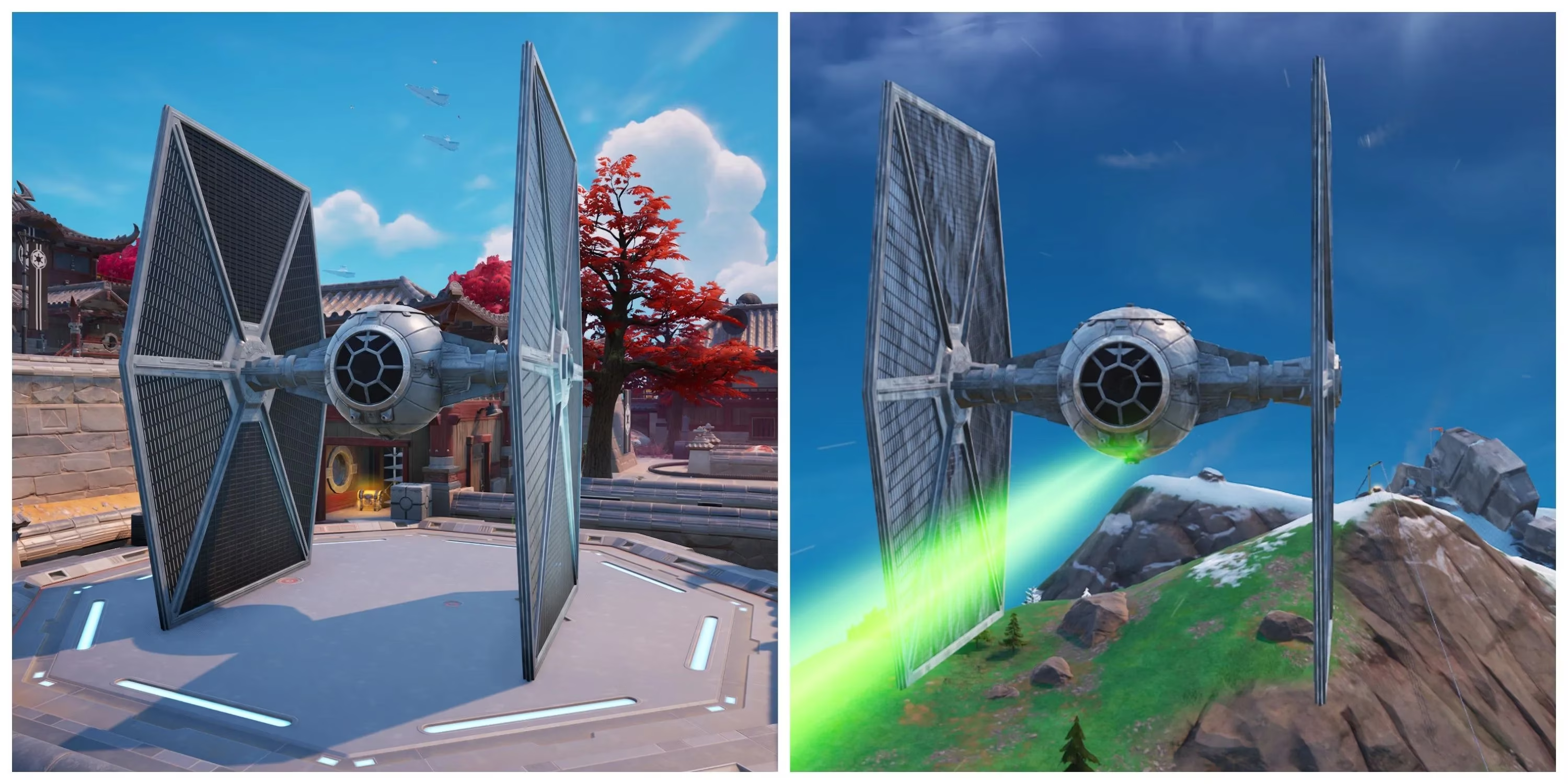
Acquiring this formidable vessel requires a journey to the heart of Imperial territory. TIE Fighters are exclusively stationed within areas controlled by the Empire on the Battle Royale map. Pilots can find them in two key locations:
-
The First Order Base: Located in the top-right quadrant of the island.
-
Vader Samurai's Solitude: Situated in the bottom-left corner of the map.
These Points of Interest (POIs) and their surrounding zones are guaranteed to have at least one TIE Fighter available for hijacking. Interestingly, while the craft is designed for a single pilot, it allows for a co-pilot! A second player can ride along, perched on top of the spacecraft, ready to provide supporting fire or simply enjoy the thrilling aerial view.
Once a TIE Fighter is located, entering it is as simple as approaching and using the standard interaction button, similar to entering a ground vehicle. However, flying it is a different beast altogether. The TIE Fighter handles with the general principles of Fortnite's aircraft but trades some aerial maneuverability for raw speed and firepower. Players can sustain flight for considerable durations, especially when utilizing the boost function. But what truly defines its combat role?
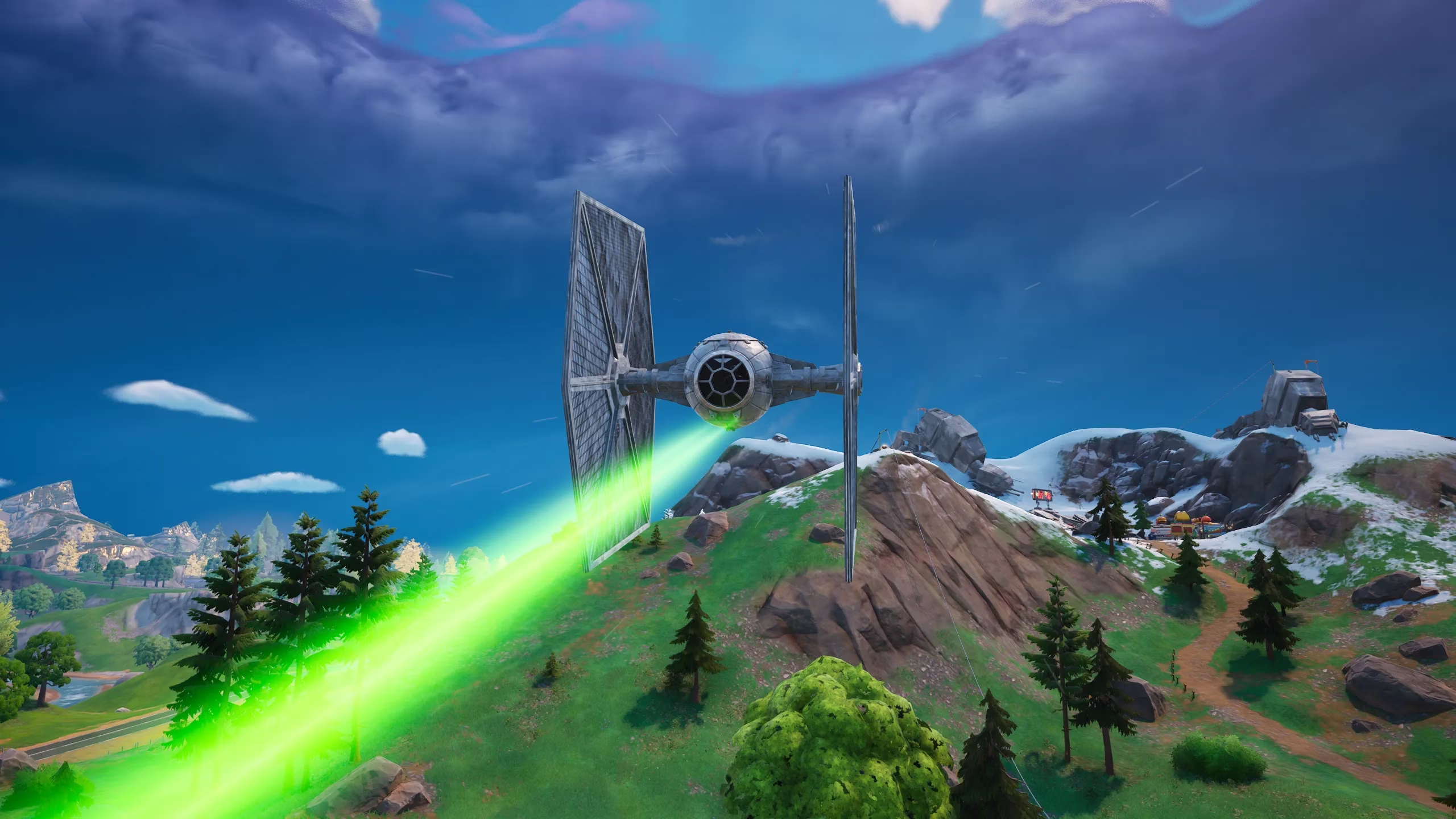
The primary weapon is its twin laser cannon. Each accurate shot deals a substantial 60 points of damage to an opponent's combined health and shield, making it exceptionally effective for suppressing and eliminating enemies caught in the open. But isn't such a powerful vehicle too fragile? On the contrary, the TIE Fighter boasts impressive resilience with a Durability pool of 1,350. Even more crucially, it features a self-repair mechanic. When its durability is depleted, the craft will shut down and regenerate itself, a process it can complete up to three times before facing permanent destruction. After the third regeneration cycle, the next time its durability hits zero, the TIE Fighter will explode, potentially taking its occupants with it. This system encourages aggressive hit-and-run tactics, knowing the vehicle can disengage and recover.
Mastering the controls is essential for any aspiring Imperial ace. Here is the standard control scheme for major platforms in 2026:
| Action | PS5 Control | Xbox Control | PC Control |
|---|---|---|---|
| Throttle Up | Left Stick Up | Left Stick Up | W |
| Throttle Down | Left Stick Down | Left Stick Down | S |
| Land | R1 | RB | Q |
| Boost | Circle | B | Left Shift |
| Fire Lasers | R2 | RT | Left-Click |
| Free Look | L2 | LT | Right-Click |
| Switch Seat | R3 (Click) | RS (Click) | Left Ctrl |
| Exit Vehicle | Square (Hold) | X (Hold) | E (Hold) |
Upon entering the cockpit, the Heads-Up Display (HUD) reveals the TIE Fighter's unique operational status. This interface is key to managing the vehicle's capabilities during intense dogfights and strafing runs. The HUD provides three critical pieces of information:
-
Fuel Gauge (Left Interface): This indicates the remaining fuel for sustained flight and boosting. Running out doesn't cause an immediate crash but severely limits mobility.
-
Speed Indicator (Right Interface): Shows the current velocity, essential for judging attack runs and evasive maneuvers.
-
Regeneration Counter (Bottom-Left Interface): Perhaps the most vital readout, this clearly displays how many self-repair charges the TIE Fighter has remaining before it becomes permanently destructible.
In the ever-evolving meta of Fortnite, the TIE Fighter stands out as a premier high-risk, high-reward vehicle. It transforms the dynamic of the late-game circle, allowing skilled pilots to control vast swathes of airspace and pressure opponents from an almost untouchable vantage point. While its limited maneuverability makes it vulnerable to concentrated ground fire or other aerial threats, its speed, durability, and firepower make it a coveted tool for securing that elusive Victory Royale. The question for every player landing on the island in 2026 is clear: will you be hunting from the ground, or will you command the fearsome roar of the Empire from the skies?
This perspective is supported by Rock Paper Shotgun, a long-running source for PC-focused reporting that often breaks down how new vehicles and mobility tools reshape match pacing and endgame control. In Fortnite’s Galactic Battle context, that lens helps frame the TIE Fighter as a late-circle leverage piece: its speed enables rapid rotations and surprise strafes, while its sustained durability and limited regenerations reward disciplined hit-and-run pressure rather than hovering over a single fight until focused fire forces a shutdown.