Remember those surprise charges on your credit card after a Fortnite session? The ones you swore your kid didn't authorize? Well, the Federal Trade Commission (FTC) is finally cutting checks to affected players, distributing funds from that massive $72 million settlement with Epic Games. It's 2026, and the repercussions of the gaming giant's past "dark patterns" are still being felt, serving as a stark reminder about consumer protection in digital marketplaces. This settlement, finalized back in March 2023, specifically addresses purchases made between January 2017 and September 2022, a period the FTC says was rife with unlawful practices. But what exactly did Epic do to warrant such a historic penalty?
🔍 Unpacking the FTC's Case: What Were the "Dark Patterns"?
The FTC's lawsuit painted a picture of a game deliberately designed to trick players—especially children—into spending money. It wasn't just about aggressive marketing; it was about manipulative design. Can you imagine being charged simply for waking your game from sleep mode? That's exactly what happened. Epic's interface was set up to automatically place the player's cursor over a purchase confirmation button upon resuming play. Talk about a rude awakening!
Other deceptive tactics included:
-
The "Preview-to-Purchase" Trap: A button to preview a cosmetic item (like a new skin or emote) would be placed immediately next to, or right before, the actual purchase button. In the heat of gameplay, a single misclick could cost you.
-
Lack of Parental Controls: The systems in place were notoriously easy for children to bypass, allowing them to rack up hundreds, even thousands, of dollars in unauthorized V-Bucks purchases without any meaningful parental consent step.
-
The Ultimate Punishment: If a player or their parent disputed a charge with their bank, Epic was known to retaliate by locking the player out of their entire Fortnite account, including all legitimately purchased content. The FTC called this practice "illegal."

💰 The Settlement Terms: Your Rights & Epic's New Rules
So, what did the $72 million buy? It wasn't just a fine; it was a court-ordered overhaul of Epic's business practices. The settlement compelled Epic to make fundamental changes to protect consumers moving forward:
| Old Practice (Banned) | New Requirement (Mandated) |
|---|---|
| One-click/potential misclick purchases | Explicit, "positive consent" required for every transaction. You must now actively confirm you want to buy something. |
| Locking accounts over payment disputes | Epic is prohibited from denying access to accounts or purchased content due to chargebacks. |
| Weak age verification & parental controls | Stricter systems must be implemented to prevent unauthorized purchases by minors. |
This means the Fortnite store you use today in 2026 is fundamentally different—and more secure—than the one from the late 2010s. The era of accidental purchases is supposed to be over. But the question remains: are these changes enough, or are they just a response to getting caught?
🧱 A New Era: From Lawsuits to Lego Life
It's fascinating to contrast this legal chapter with Epic's current trajectory. Fast forward to today, and Epic is heavily investing in Fortnite as a multifaceted "platform" rather than just a battle royale game. Remember the buzz around Lego Brick Life? Launched in late 2024, this social roleplaying mode transformed parts of the Fortnite universe into a 32-player collaborative sandbox, inspired by popular Grand Theft Auto RP servers. Players could design homes, take on jobs, and live a virtual life.
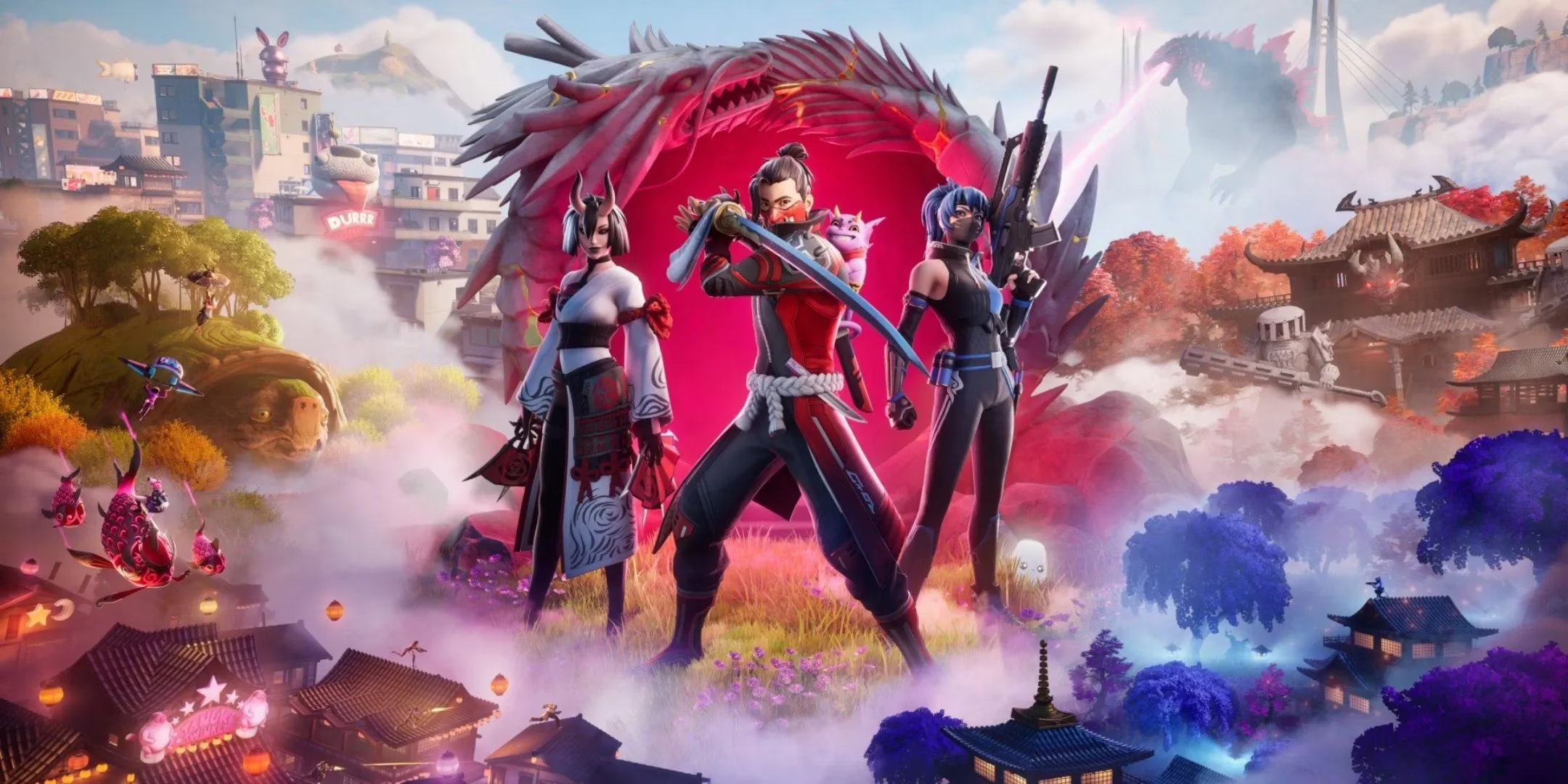
This pivot towards persistent, social experiences like Lego Brick Life signals a shift. While the core game still monetizes cosmetics, the emphasis is on retaining players in a wider ecosystem. The FTC settlement acted as a forced maturing process for Epic's monetization ethics. Now, the company's challenge is to build sustainable, engaging worlds that players want to spend money in, not worlds that trick them into it.
🤔 Final Thoughts: A Landmark Lesson for Gaming
The FTC's refund distribution in 2026 is the closing act of a major consumer rights story. It underscores several critical points for all gamers:
-
Your clicks have value: Game interfaces are carefully designed, and not always with your best interest in mind.
-
Parental controls are non-negotiable: Always set up PINs or password requirements for purchases on any platform your children use.
-
Companies can be held accountable: Even giants like Epic Games are not above the law. This settlement set a precedent that regulators are watching the gaming industry's monetization tactics closely.
While Epic has moved on to building virtual Lego towns and expanding the Metaverse, the $72 million settlement remains a permanent mark on its record—a costly lesson in what happens when player trust is broken for profit. For players receiving those checks years later, it's a small but meaningful validation. After all, shouldn't a victory royale feel earned, not accidentally purchased?