Fortnite Chapter 5 Season 2 Medallions: A 2026 Player’s Retrospective Guide
Back in March 2024, Fortnite Chapter 5 Season 2: Myths & Mortals turned the battle royale island into a Greek myth playground. In 2026, I still get questions from friends about how those mythic medallions worked, and I understand why. The season is long gone from the live rotation, but its boss-summoning loop and four distinct medallions remain one of my favorite examples of Fortnite mixing looting with mythology. I’ve been revisiting my notes and match clips, and here’s the player-friendly guide I wish I’d had at the time.
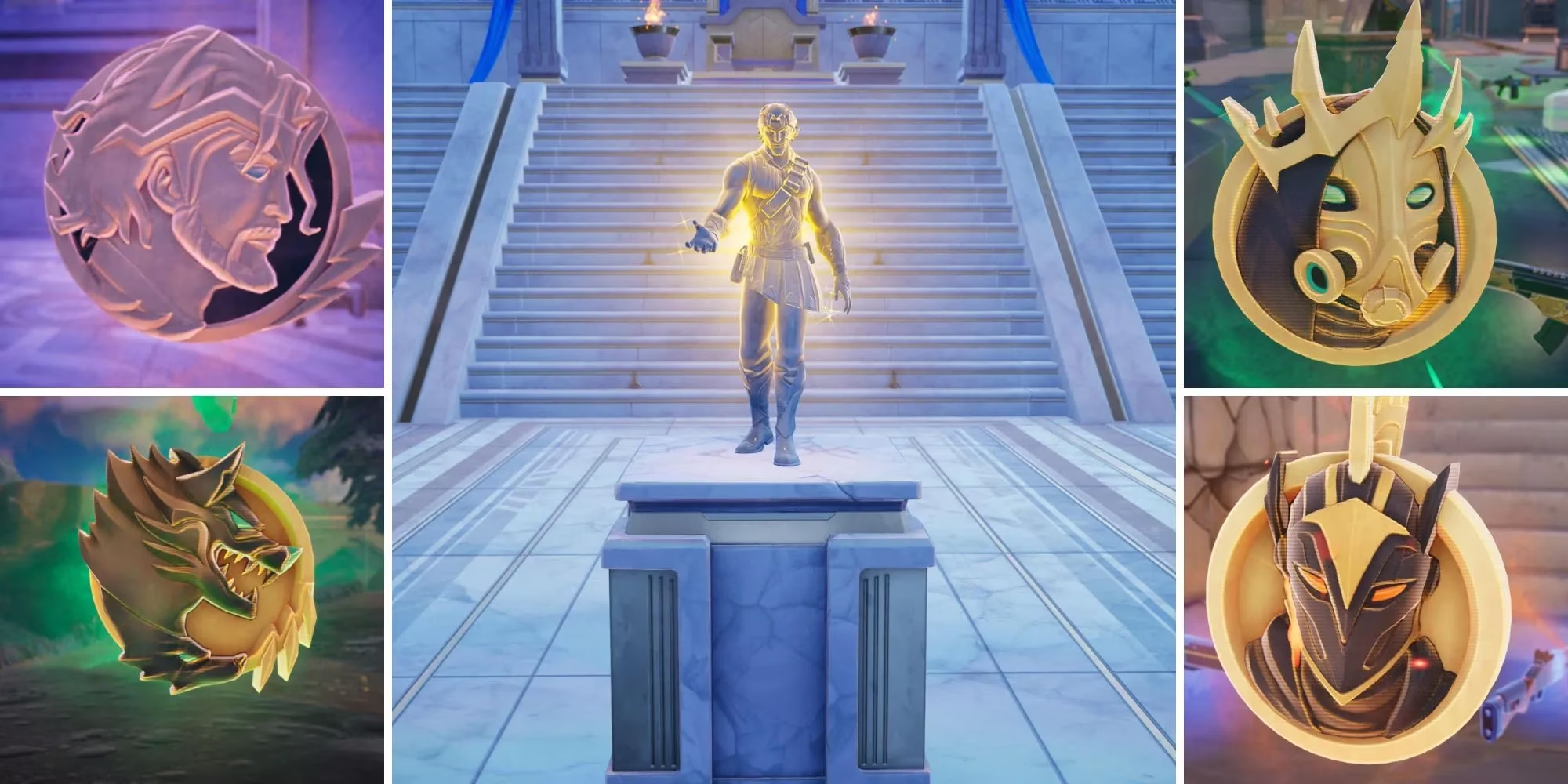
To be clear, this is a retrospective. As of 2026, Fortnite has cycled through many chapters and seasons, and I wouldn’t treat these locations as a current drop map. But if you’re researching old metas, comparing medallion design, or just feeling nostalgic, the details still matter. The core idea was simple: find a boss statue, interact with it, survive the fight, and claim a medallion with a unique perk. Unlike some earlier medallions that felt like minor variations, these four pushed players toward different playstyles.
Quick Reference Table
| Medallion | Boss | Location | Effect |
|---|---|---|---|
| Aspect of Speed | Zeus | Mount Olympus | Increased run and jump speed while sprinting |
| Aspect of Siphon | Hades | The Underworld | Restored vitality upon eliminations |
| Aspect of Combat | Ares | Brawler’s Battleground | Increased damage for all ranged weapons |
| Aspect of Agility | Cerberus | Grim Gate | Three charges of Underworld Dash |
That table is the short version. The interesting part, at least for me, was how each boss encounter forced a different approach. You weren’t just chasing a loot drop. You were choosing a risk level and a reward profile.
Zeus’ Medallion: Aspect of Speed
To find Zeus, I had to make my way to Mount Olympus. The summoning method was straightforward but easy to miss in the middle of a hot drop. I needed to find Zeus’ statue sitting on a pedestal, interact with it, and watch my character throw it on the ground. That action summoned Zeus, and suddenly the fight was on. Once I defeated him, I gained his medallion, the Aspect of Speed. This medallion increased the run and jump speed of characters while sprinting.
In my experience, this was the medallion for players who wanted to dictate rotations. It didn’t directly win a gunfight, but it made escaping bad fights and third-partying more attractive. If I was playing with friends who liked to push every sound, Zeus was usually our first stop. The tradeoff was that Mount Olympus could be crowded, and the boss fight itself could attract a second audience.
Hades’ Medallion: Aspect of Siphon
To find Hades, I needed to make my way to The Underworld. Once I arrived, I scoured the location for a pedestal with a statue of Hades on it. Interacting with the statue threw it on the ground and summoned the boss. After beating Hades, I was able to loot the Aspect of Siphon medallion. This medallion restored vitality upon eliminations.
That effect sounds simple, and it was. But in practice, it changed how confident I felt in extended fights. Every elimination became a small reset button. I didn’t have to disengage immediately after a close trade if I could secure the knock and finish the fight. The catch was that Hades’ domain had its own atmosphere of danger. The Underworld was not a quiet place to farm a boss, and I often had to decide whether the siphon payoff was worth the chaos.
Ares’ Medallion: Aspect of Combat
Ares was the boss I chased when I wanted raw damage. The Aspect of Combat increased the damage of all ranged weapons, and it was dropped by Ares. To find him, I made my way over to Brawler’s Battleground. Once there, I looked around for a pedestal with a statue of Ares on it. Interacting with the statue smashed it and summoned the boss. When the boss was defeated, I was able to collect Ares’ medallion.
This one felt like a direct invitation to take every ranged fight. In a season with so many mythic toys and mobility options, a flat ranged damage boost was easy to understand. I liked it most when I had a reliable mid-range weapon and enough healing to survive the boss fight. The downside was predictability. Everyone knew Ares was worth contesting, so Brawler’s Battleground often turned into a multi-team scramble.
Cerberus’ Medallion: Aspect of Agility
Cerberus’ medallion, the Aspect of Agility, was the only one that gave a new power instead of a buff. Once I killed Cerberus at Grim Gate, I was free to collect his medallion. The summoning step was the same ritual: look for a pedestal with his statue on it and interact with it to trigger the boss fight. After collecting the medallion, I gained three charges of Underworld Dash. This allowed me to dash forward through the air by tapping jump twice. The ability recharged over time.
This was my favorite medallion to use, even if it wasn’t always the most powerful on paper. The dash gave me a way to reposition over terrain, dodge a shot, or close a gap without spending a launch pad. It also raised the skill ceiling. I had to track charges and decide when a double-jump dash was worth the commitment. In 2026, I still think this was one of the more creative medallion designs Fortnite has tried.
Final Thoughts From a 2026 Perspective
Looking back, I appreciate how Chapter 5 Season 2 made each medallion feel like a choice rather than a checklist. Zeus encouraged mobility. Hades rewarded aggression with sustain. Ares boosted ranged pressure. Cerberus added a movement tool with real decision-making. The season may be in the past, but as a player in 2026, I still find those design lessons worth discussing. If Fortnite ever revisits a mythic medallion system, I hope it keeps this level of variety. 🏛️⚡