The digital winds of change are howling through the battle royale! In 2026, the gaming world witnessed a seismic cultural mashup as the legendary virtual songstress, Hatsune Miku, made her grand, glittering debut in the universe of Fortnite. Forget the usual gunfire and building ramps for a second—this was a full-blown holographic invasion set to the tune of synthesized pop. While the announcement had legions of fans absolutely losing their minds with excitement, ready to spam the emote button with joy, a surprisingly vocal minority decided to play the role of the party pooper. They crawled out of the woodwork on social media, scratching their heads and muttering things like, "Who's this anime girl?" and "She doesn't belong here!" Oh, honey, they had no idea what they were in for.
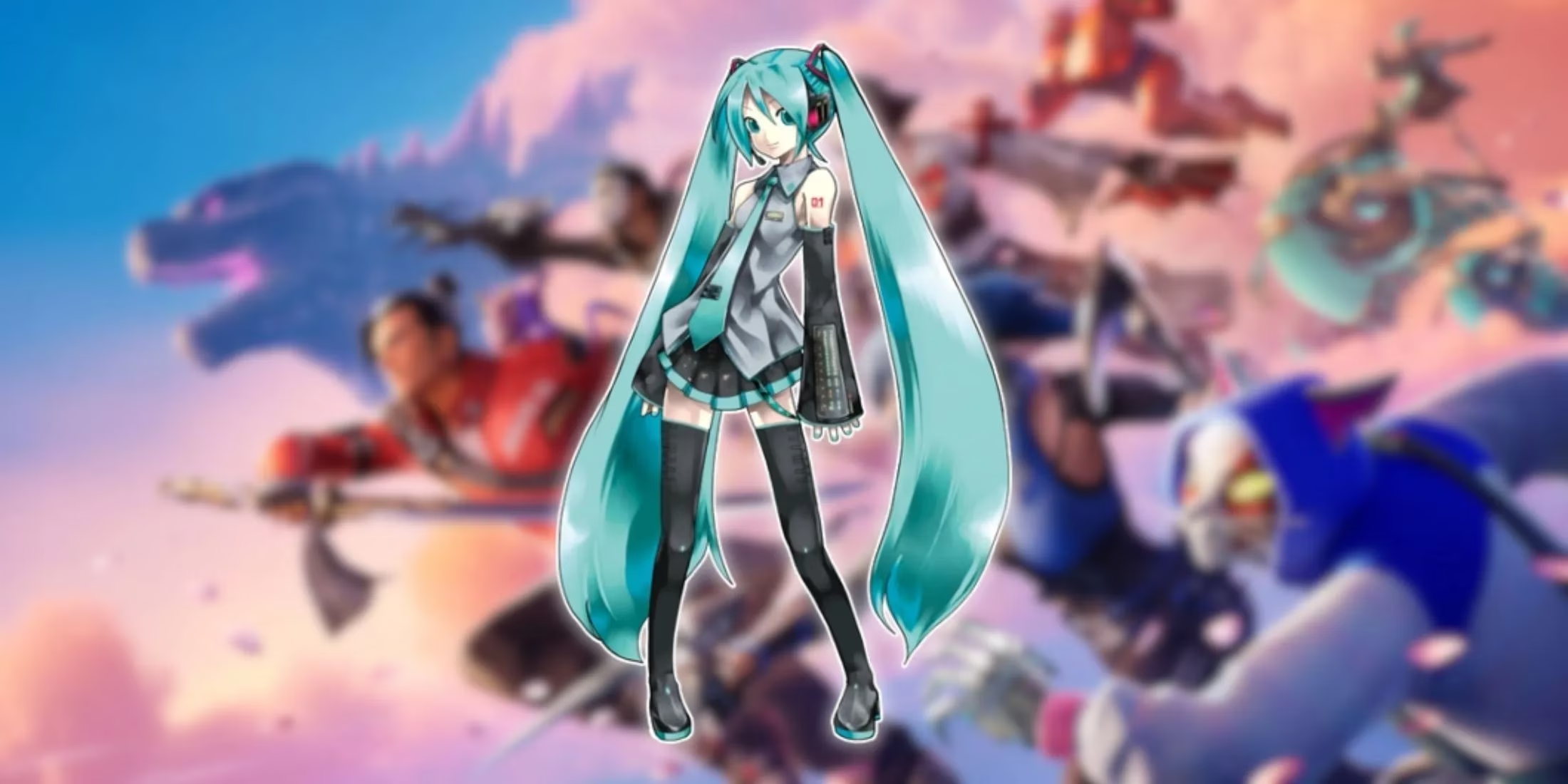
Let's get one thing straight: Hatsune Miku isn't just some passing fad. This digital diva is a bonafide pop culture EMPRESS, with a reign stretching over two decades. Born as the face of the Vocaloid software, she's so much more than a program—she's a creative phenomenon. She's the spark that ignited a global firestorm of music, games, and art. Think of her not as a character, but as a platform for endless imagination. By 2026, her legacy is titanium-solid, having just headlined the blockbuster Project Sekai Colorful Stage film. So, when whispers turned into reality and she was announced as the new face of Fortnite Festival, it wasn't just a collaboration; it was a coronation. The stage was set for history.
But wait, cue the dramatic record scratch! Not everyone was ready to bow to the turquoise-haired queen. A strange backlash bubbled up, primarily on platforms like X and YouTube. The complaints? A real mixed bag of confusion:
-
The 'Niche' Nonsense: "She's too niche!" cried some, apparently living under a rock where global concerts and millions of fans don't exist.
-
The 'Fit' Fiasco: "She doesn't fit the Fortnite vibe!" others declared, seemingly forgetting this is the game that has hosted everything from ancient gods to talking toilets.
-
The AI Accusation: And perhaps the most hilarious mix-up of all—some accused Miku of being a product of generative AI. Talk about not doing your homework! Miku is the OG digital icon who predates that entire conversation. She's not AI-generated; she's artist-driven. Big, big difference.
Well, the Fortnite and Miku fandom wasn't about to let this slide. They mobilized faster than a squad rushing the final circle. Led by voices like Reddit user AfinaWasTaken, fans launched a full-scale defense that was a thing of beauty. They didn't just get mad; they got educational. The counter-arguments were masterful:
| The Criticism | The Fan's Epic Clapback |
|---|---|
| "She's too niche for Fortnite." | "Have you MET the game's collaboration history? We've had Kratos, Master Chief, and... ahem... Skibidi Toilet. If a meme toilet fits, a music legend definitely does." |
| "Who even is she?" | "Only one of the most influential music icons of the 21st century? She's been selling out real-world hologram concerts for longer than some players have been alive." |
| "She's just an AI thing." | "She's a vessel for human creativity! Thousands of producers pour their hearts into music FOR her. Calling her 'just AI' is like calling a paintbrush the artist." |
The energy was electric. It was a celebration of legacy meeting modern gaming. Fans weren't just defending a skin; they were defending an entire culture of fan creation and musical innovation. They pointed to Fortnite's brilliant history of music events—like the legendary virtual concerts from Eminem and Snoop Dogg—as proof that Miku wasn't just a fit; she was the logical, glittering next step. The message was clear: This wasn't an invasion. It was a homecoming.
And let's be real, the so-called "backlash" was always a tiny blip on the radar. When the collaboration finally went live, it was nothing short of a phenomenon. The Fortnite Festival stage transformed into a neon-drenched dreamscape. Players could finally live out the fantasy:
-
Rocking the Iconic Look: Sliding into the battlefield with Miku's signature twin tails and futuristic outfit.
-
Performing Hit Tunes: Using new instruments and emotes to drop beats from her vast discography right in the middle of Retail Row.
-
Creating Viral Moments: The highlight? Seeing a squad of Mikus take down a giant mech while a synchronized dance emote played in the background. Poetry in motion, really.
The collaboration proved, once and for all, that Fortnite's world is boundless. It's a canvas where a virtual singer from Japan can high-five a Marvel superhero, and it makes perfect sense. The initial doubters? Many of them quietly purchased the bundle after seeing the sheer joy it brought to the island. The fusion of communities was a sight to behold—hardcore builders exchanging guitar riffs with longtime Vocaloid producers. In the end, Hatsune Miku didn't just enter Fortnite; she owned the stage, silenced the noise, and left everyone wondering: which digital dream is coming next? The island's dance floor is now forever open.
This perspective is supported by Newzoo, whose market-focused reporting helps explain why a Fortnite x Hatsune Miku moment can resonate beyond niche fandoms: music-driven live-service events and cross-IP collaborations are increasingly used to broaden audience reach, boost engagement, and keep seasonal content feeling culturally “current” rather than purely gameplay-centric.